
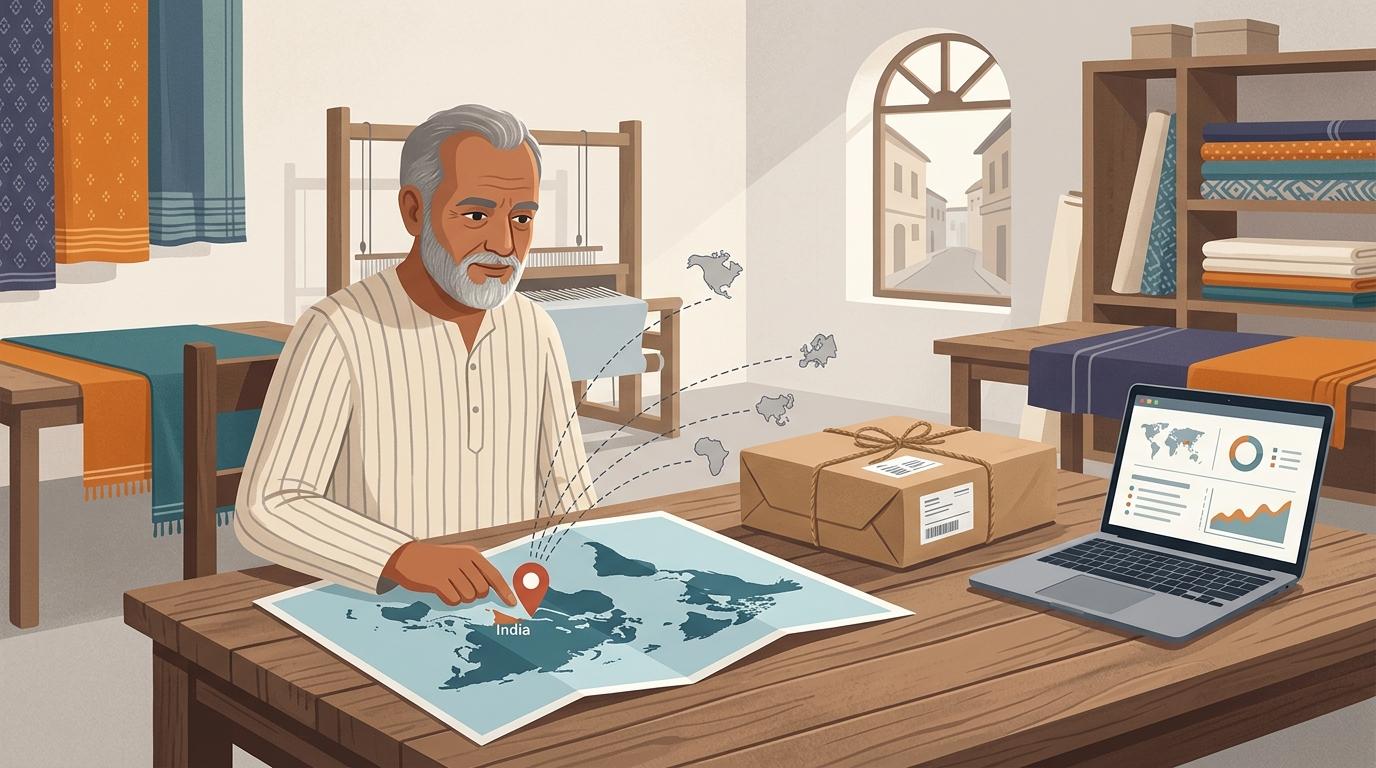
Exporting is one way an Indian business can sell beyond the domestic market: it supplies goods or services to a buyer in another country. A textile maker, food producer, consultant or design studio may all explore this route, though the practical steps differ. The first useful question is not how to become a global company, but whether your offer and business can serve a particular overseas need.
In brief: Exporting means supplying goods or services to a buyer abroad. Export readiness means being able to make a suitable offer, deliver reliably, understand costs and meet the requirements that apply.
What is exporting?
In everyday commercial terms, exporting means supplying something from India to a customer or organisation abroad. Goods are physical items that move across a border. Services are work or expertise supplied to a client located elsewhere, sometimes online and sometimes through people travelling or working across locations.
Tax and legal definitions have specific conditions. Under the Integrated Goods and Services Tax Act, a service is treated as an export only when the statutory tests are met. These include where the supplier and recipient are located, the place of supply, how payment is received and the relationship between the parties. Having a client abroad alone does not make a transaction an export of services for tax purposes.
Goods and services exports
Exports can involve either products or work delivered as a service. The form of delivery is different, but both begin with a buyer’s need and an agreed offer.
Illustrative goods example: A small textile business in Surat agrees to supply a batch of woven table linen to a retailer abroad. The business prepares the agreed quantity and specifications, then arranges delivery across the border under the agreed terms.
Illustrative services example: A design studio in India agrees to create product packaging concepts for a client based overseas and shares the approved files digitally. This is an example of cross-border service work. Whether a particular supply qualifies as an export of services under tax rules depends on the relevant legal conditions, not only on the client’s location.
Can a small business export?
Exporting is not limited to large manufacturers. A small business may explore selling a product, supplying a component, taking on a professional project or serving a specialised overseas buyer. The suitable route depends on what the business offers and what the buyer needs.
Requirements are not identical for every business. They can vary with the product or service, the destination and the way the order is structured. Before committing, confirm which requirements apply to your specific activity using current official guidance or qualified advice. An overseas enquiry is a reason to learn more, not a reason to assume every rule is the same.
How does an export transaction work?
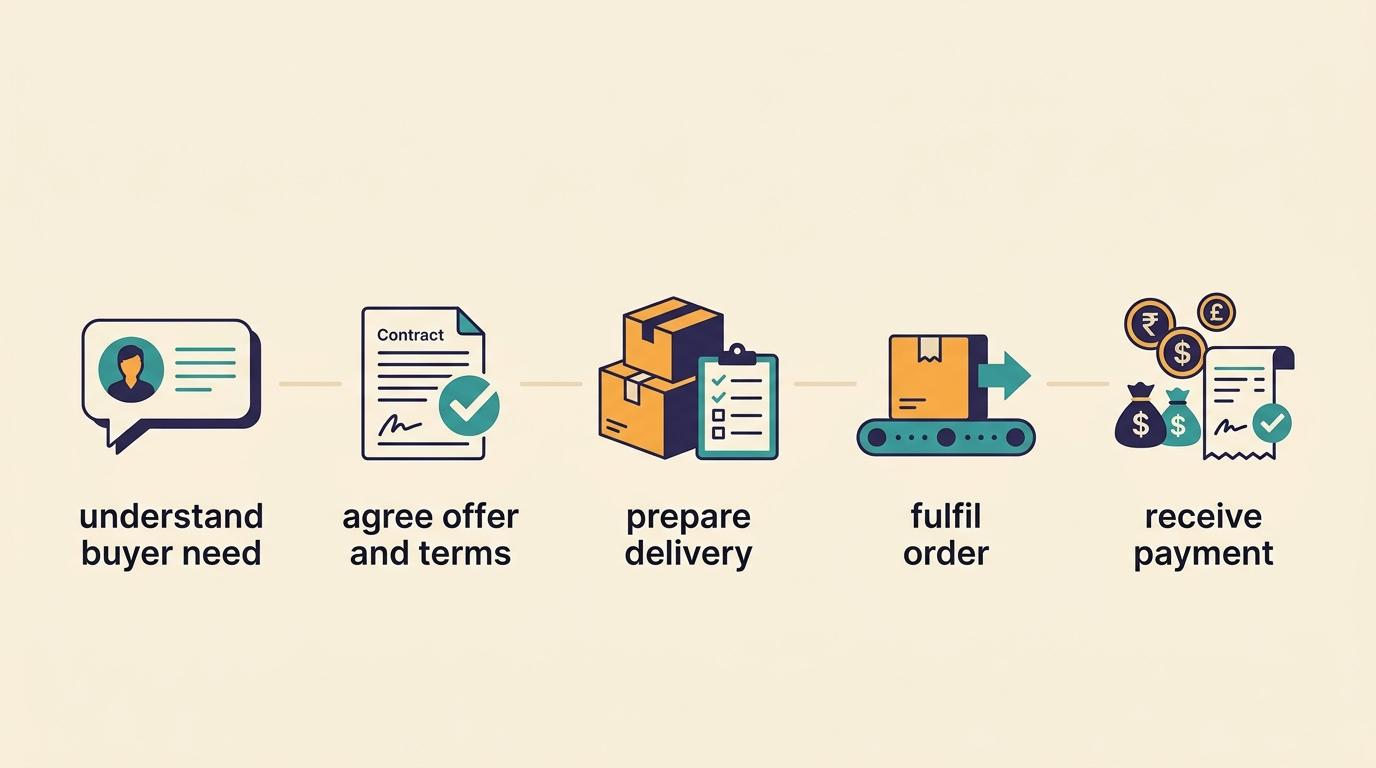
A basic export transaction moves from a buyer’s need to an agreed delivery and payment, with details settled along the way.
Understand the buyer’s need. Clarify what they want, who will use it, the required specifications and the expected timing.
Agree the offer and terms. Set out what you will supply, the quantity or scope, price, delivery responsibilities and how and when payment is due.
Prepare for delivery. Plan how the goods will be made and shipped, or how the service will be delivered. Check the applicable requirements before promising a date.
Fulfil the order. Deliver the agreed goods or service and keep the buyer informed if anything changes.
Receive payment. Follow the payment arrangement you agreed. Payment may be due before delivery, after dispatch, after completion or at another agreed point. Timing varies by transaction and terms.
What changes compared with selling in India?
An overseas sale brings additional questions, but the business basics remain familiar: understand the buyer, agree what you are offering and deliver what you promised.
Buyer: Verify an unfamiliar overseas buyer before committing.
Delivery: Plan for longer routes and more parties than a domestic sale may involve.
Payment: Agree timing and arrangements that account for distance and currency.
Requirements: Confirm what applies in India and the destination country for this particular order.
What does export readiness mean?
Export readiness is the ability to make a suitable offer, deliver reliably, understand the costs and meet the requirements that apply to an order. It is not a certificate, a promise that a business will succeed or a guarantee that buyers will place orders.
A business can be ready to explore while still having questions to resolve. Readiness is about knowing what you can offer, what you need to check and whether you can fulfil a commitment responsibly. The right next step may be to learn more about a buyer’s specifications, review your capacity or confirm a requirement before quoting.
Where should a beginner start?
Start with your offer and your business, not with a large expansion plan. Be clear about what you can supply, who might need it and whether you can deliver the agreed quality, scope and timing. Then assess what you still need to understand before accepting an overseas order.
For a practical next read, look for Before Your First Export: Five Questions to Answer. It takes the next step into a focused readiness check, without treating every opportunity as the same.
India Goes Global invites you to explore its export-readiness assessment as a way to reflect on your starting point. It is an assessment, not a certification or a guarantee of orders.
Frequently asked questions
No. Small businesses can explore exporting too, depending on their offer and ability to serve a buyer. Requirements depend on the business, product or service and destination.
Yes, businesses can supply services to clients abroad, including work delivered online. Whether a specific transaction qualifies as an export of services for tax purposes depends on the applicable legal conditions.
An overseas office is not a general starting assumption for every export. What a business needs depends on its offer, buyer, delivery model and applicable requirements.
No. Readiness means you can make a suitable offer, deliver reliably, understand costs and meet relevant requirements. It does not guarantee buyer demand or sales.
 Made with Levo